 Optical Transport Networking Solution
 FTTH Solution
 Home Networking Solution
 POL Solution
 Outdoor OLT Solution
 More
More
 Brand News
 Product News
 Tech Blogs
 CMS
CMS
 Tech Support
 Document Download
 Software Download
 FAQ
FAQ
 Training Center
 About Us
 Careers
 Partners
 Quality Assurance
 Video Center


This website uses cookies to ensure you get the best experience. Some cookies are essential, while others help
us improve your experience by analyzing data or showing personalized content.
For details, please see our
Privacy Policy.

Fiber access networks are moving from basic broadband connectivity to high-capacity, cloud-managed, multi-service access infrastructure. As user demand grows for gigabit broadband, 10G services, smart city applications, enterprise access, Wi-Fi 6/7 backhaul, cloud applications and low-latency services, the OLT is also evolving.
A next-generation OLT is no longer just a PON access device. It is becoming a scalable access platform that supports higher-speed PON technologies, flexible migration, centralized management, automation, energy efficiency and distributed deployment.
This article explains the major OLT future trends and next-generation OLT technologies that ISPs, telecom operators, smart communities, campuses and enterprise network planners should watch.
OLT technologies are evolving because broadband networks must support more users, higher bandwidth capacity, more upstream traffic and more complex services. Traditional GPON OLTs are still useful for many FTTH projects, but many operators are already planning upgrades toward XGS-PON, Combo PON, 25G PON, and 50G PON networks.
Several factors are driving OLT evolution:
Higher residential broadband speed demand
Enterprise cloud application growth
Video conferencing and remote work
Wi-Fi 6 and Wi-Fi 7 backhaul
Smart city and surveillance traffic
Rural broadband expansion
Multi-service access over one fiber network
Need for lower operation and maintenance cost
Migration from GPON to 10G and higher-speed PON technologies
For many operators, the future of OLT is not about replacing every device immediately. It is about choosing a platform that can support gradual migration, stable management and long-term service growth.
GPON remains widely used because it is mature, cost-effective and suitable for standard FTTH broadband. However, XGS-PON is becoming an important upgrade direction when operators need 10G-class access and higher symmetric bandwidth.
According to ITU-T G.9807.1, XGS-PON is defined as a 10-Gigabit-capable Symmetric Passive Optical Network. This makes it more suitable for premium broadband, enterprise services, cloud applications, high-density Wi-Fi and business users that need stronger upload performance.
A GPON OLT is still practical for standard FTTH and FTTB deployment, while an XGS-PON OLT is more suitable for operators preparing for higher-speed broadband packages.
The key upgrade logic is:
Network Stage | Suitable OLT Direction | Typical Reason |
Standard broadband | GPON OLT | Mature, cost-effective and widely deployed |
Premium broadband | XGS-PON OLT | Higher downstream and upstream capacity |
Mixed users | Combo PON OLT | GPON users and XGS-PON users coexist |
One of the most important OLT future trends is smooth migration. Many operators already have GPON networks and a large number of GPON ONUs in service. Replacing the whole access network at once is expensive and risky.
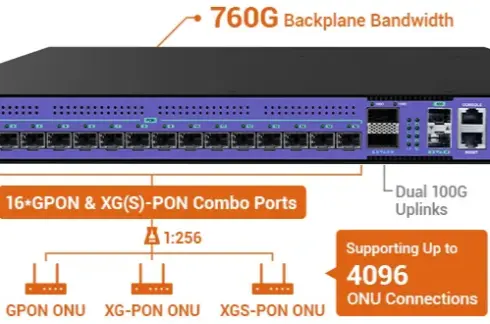
A Combo PON OLT helps operators support GPON and XG(S)-PON coexistence during network upgrade. This allows existing GPON users to stay online while premium or new users move to higher-speed services.
Combo PON OLT is valuable because it can help operators:
Protect existing GPON investment
Reduce migration disruption
Reuse part of the existing ODN where possible
Launch premium 10G broadband packages
Upgrade by area, user group or service tier
Avoid unnecessary full-network replacement
In future access networks, Combo PON is likely to remain important because broadband upgrade is usually gradual. Operators need flexible coexistence instead of one-step replacement.
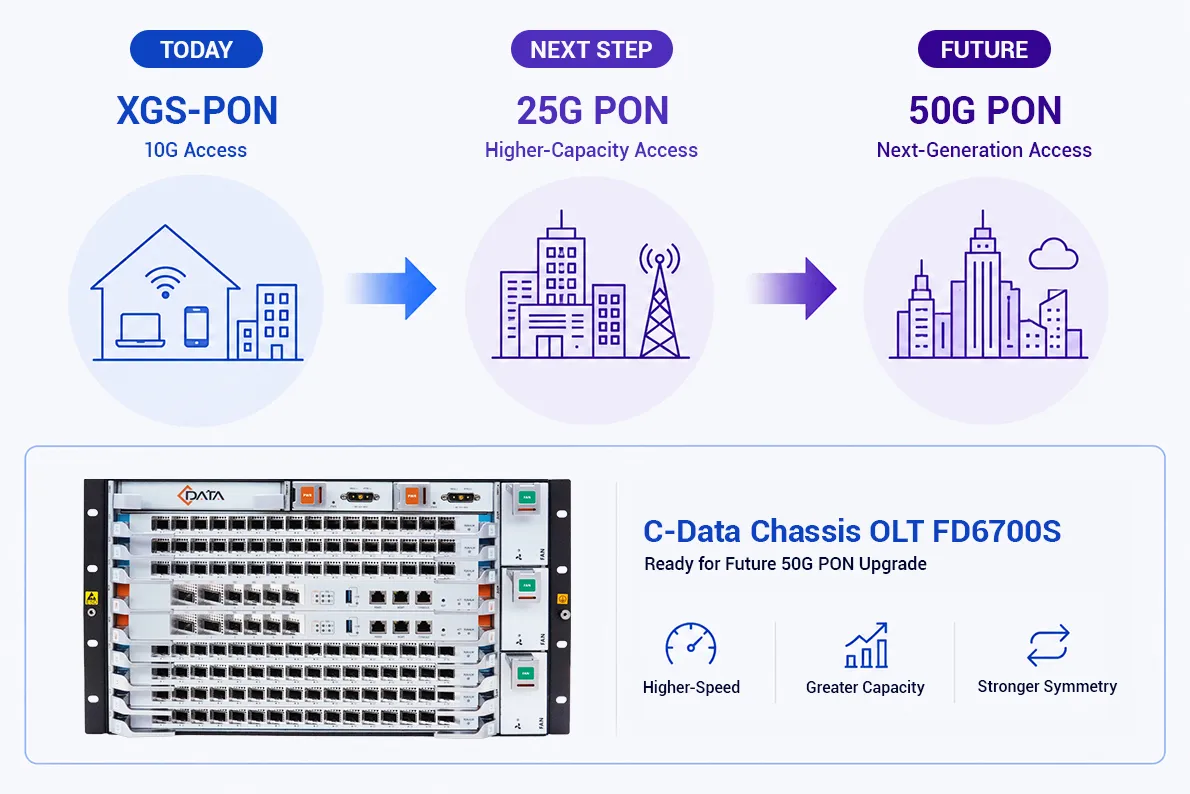
Beyond XGS-PON, higher-speed PON technologies are emerging as part of next-generation access planning. 25G PON and 50G PON are especially important for operators that need higher access capacity, enterprise connectivity, mobile transport, cloud services and high-density broadband.
The 25GS-PON MSA Group states that 25GS-PON provides a cost-effective and timely network upgrade path for the mobile 5G era and large-scale enterprises where symmetrical connections become increasingly important. This makes 25G PON relevant for operators that need more than 10G capacity but want a practical upgrade path.
For 50G PON, ITU-T G.9804.3 defines the physical media dependent layer specification for 50-Gigabit-capable passive optical networks. This shows that higher-speed PON technology is no longer only a future idea; it is part of the standards roadmap for next-generation fiber access.
For OLT selection, this trend means operators should consider:
Whether the platform has a clear 10G and beyond-10G roadmap
Whether uplink capacity can support higher PON rates
Whether the ODN quality can support future upgrades
Whether the management system can support mixed PON generations
Whether user demand justifies higher-speed access investment
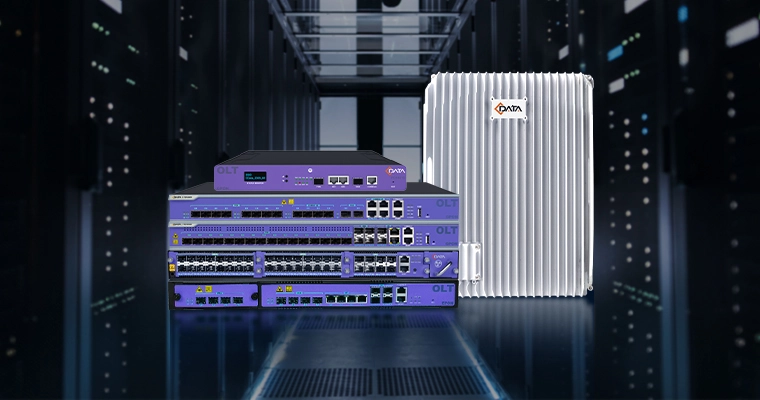
For operators planning beyond 10G, C-Data modular chassis OLT FD6700S are designed with future evolution in mind, providing a flexible platform ready for future 50G PON upgrade.
As PON access capacity increases, OLT uplink design becomes more important. A high-speed PON network can still suffer from congestion if uplink ports are not planned correctly.
In the past, GE or 10GE uplinks were enough for many access networks. As operators move toward XGS-PON, Combo PON, 25G PON and 50G PON, OLT uplinks may need 25GE, 40GE, 100GE or even higher-capacity aggregation design.
Future OLT platforms are expected to require:
More 10GE or 25GE uplink ports
100G uplink capability for high-density access
Link aggregation support
Redundant uplink design
Stronger switching capacity
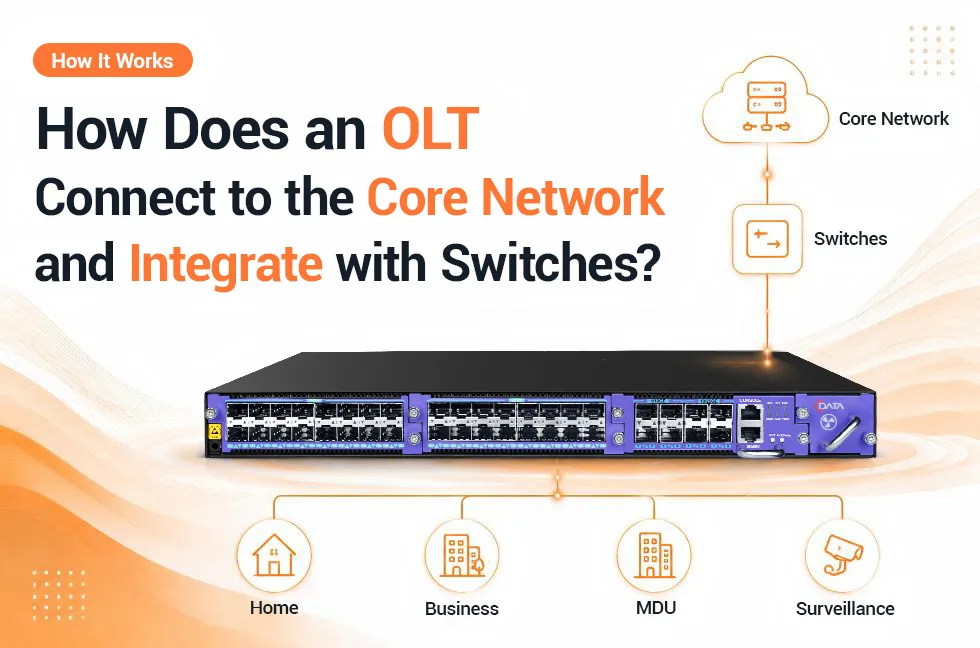
Better integration with aggregation switches
Flexible uplink module options
For example, operators planning 10G broadband should not only compare PON port speed. They should also check whether the OLT uplink, aggregation switch and upper-layer network can support the traffic growth.
Another important OLT future trend is cloud-based and centralized management. As operators deploy more OLTs in communities, rural areas, smart cities, outdoor cabinets and enterprise sites, manual local maintenance becomes inefficient.
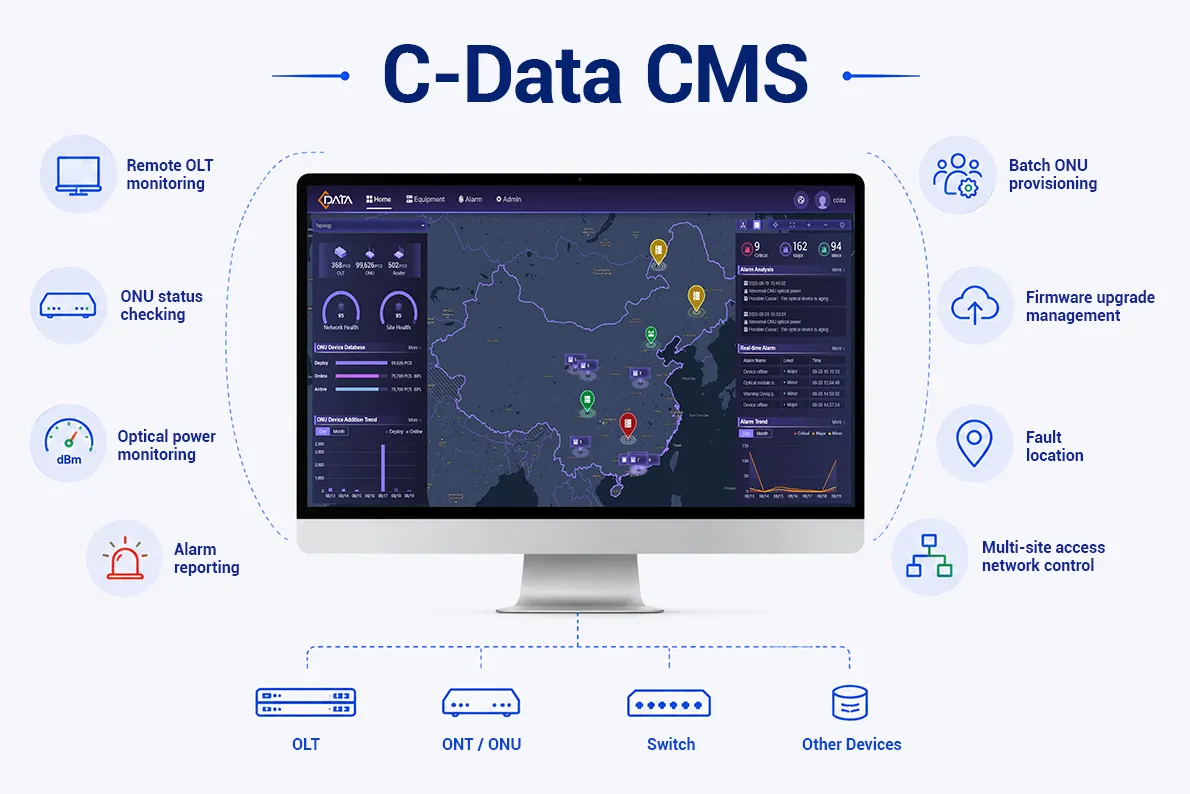
A cloud-managed OLT or centrally managed OLT can help operators monitor devices, configure ONUs, upgrade firmware, detect alarms and troubleshoot access issues remotely.
In practical deployment, centralized OLT management can support:
Remote OLT monitoring
ONU status checking
Optical power monitoring
Alarm reporting
Batch ONU provisioning
Firmware upgrade management
Fault location
Multi-site access network control
For networks that require operational efficiency, OLT web interface and centralized management platforms are becoming more important than before.
To help operators manage growing networks more efficiently, C-Data CMS provides a unified management platform for OLT and ONU, enabling centralized management and intelligent maintenance, reducing operational complexity as networks scale.
Traditional OLT systems are often vertically integrated. Hardware, software, management and service functions may come from one vendor system. In the future, more operators may evaluate open and disaggregated access architectures.
The Broadband Forum OB-BAA overview describes Broadband Access Abstraction as a framework that provides functions to manage and control physical and disaggregated access nodes independently of southbound and northbound protocols. This kind of abstraction can help operators reduce vendor lock-in and improve software-driven access management.
Open or disaggregated OLT trends may include:
Hardware and software separation
Standardized management interfaces
Cloud-native management and orchestration
Software-defined access networks
Easier multi-vendor integration
Centralized policy control
Automation-friendly provisioning
Faster service rollout
This trend may not be necessary for every small ISP or enterprise network. However, for larger telecom operators, open access architecture can become important for long-term scalability and operational flexibility.
Future OLT deployment is also becoming more distributed. Instead of placing every OLT in a central office, operators may deploy smaller or outdoor OLTs closer to users.
Distributed OLT deployment is useful for:
Rural broadband
Remote communities
Smart city access nodes
Outdoor cabinets
Industrial parks
Transportation networks
Campus edge access
Areas with long fiber distances
Outdoor OLTs, such as the C-Data FDC600Y, enable operators to deploy fiber access closer to subscribers when indoor equipment rooms are unavailable or impractical. They are well suited for rural broadband, smart city projects and scenarios where access points are scattered.
Beyond outdoor OLT deployment, C-Data Distributed PON solution is also a flexible approach for future access networks. It enables centralized management while deploying access nodes closer to subscribers, providing greater fiber resource efficiency and supports flexible network expansion.
Energy efficiency is becoming a practical concern in access network planning. As operators deploy more OLTs and support higher bandwidth, power consumption and cooling cost become part of long-term operation planning.
Future OLT design may focus more on:
Lower power consumption per PON port
More efficient chips and optical modules
Intelligent power-saving features
Better thermal design
Compact hardware with lower cooling demand
Energy-saving modes during low traffic periods
Reduced on-site maintenance cost
For operators, energy efficiency is not only an environmental topic. It affects operating cost, cabinet design, backup power planning and long-term network profitability.
Future OLTs will need to support more than home broadband. A single access network may carry residential internet, IPTV, VoIP, public Wi-Fi, surveillance, enterprise access, smart city IoT, campus services and mobile transport.
This means future OLT platforms should support:
VLAN and QinQ service separation
QoS for video, voice and business traffic
Multicast for IPTV
Higher upstream bandwidth for cameras and cloud services
Flexible ONU profiles
Enterprise private service support
Centralized performance monitoring
Secure management channels
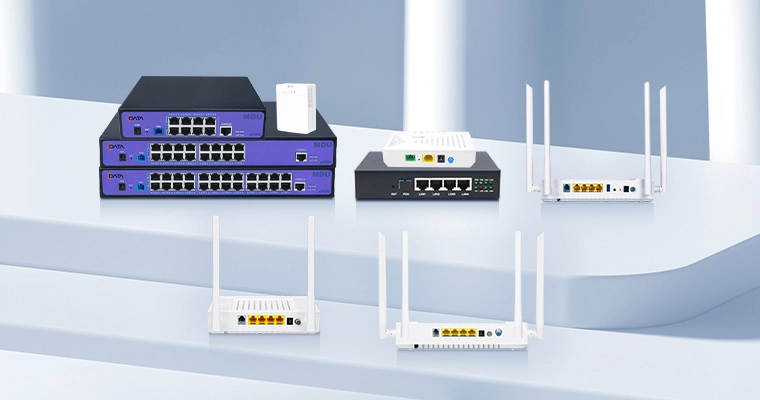
A future-ready C-Data OLT deployment should be planned together with ONUs, aggregation switches, service platforms and management systems. The goal is not only higher speed, but more reliable service delivery over one fiber access infrastructure.
As OLT networks grow, manual troubleshooting becomes harder. Future access networks may use more automation and AI-assisted operation tools to detect faults, optimize configurations and predict service risks.
Possible AI-assisted OLT management functions include:
Abnormal traffic detection
ONU offline pattern analysis
Optical power trend monitoring
Predictive failure alerts
Automatic configuration templates
Batch provisioning recommendations
Service quality analysis
Faster troubleshooting suggestions
AI-assisted O&M is expected to augment rather than replace network engineers. Instead, it can help engineers find problems faster, reduce repetitive tasks and improve service stability in large access networks.
Operators should not adopt every new technology at once. A better approach is to plan a staged migration based on user demand, network condition and business goals.
A practical roadmap may include:
Planning Stage | Key Action |
Current network review | Check GPON/EPON OLT base, ONU quantity and ODN condition |
Bandwidth forecast | Estimate 3-year and 5-year bandwidth growth |
Uplink audit | Confirm aggregation and uplink capacity |
10G readiness | Evaluate XGS-PON or Combo PON requirements |
ODN testing | Check optical split ratio, optical loss and fiber quality |
Management upgrade | Improve EMS, NMS or cloud management capability |
Pilot deployment | Test next-generation OLT in selected areas |
Gradual migration | Upgrade by community, user tier or business service |
Future expansion | Prepare for 25G/50G PON where demand justifies it |
This staged approach helps operators avoid unnecessary overinvestment while keeping the network ready for future growth.
When selecting a next-generation OLT, operators should check:
Does it support GPON, XGS-PON or Combo PON migration?
Is the uplink capacity enough for future bandwidth growth?
Can the OLT support centralized management?
Does it support VLAN, QoS, multicast and ONU profile control?
Is the platform scalable for more PON ports or service boards?
Can it support outdoor or distributed deployment if needed?
Does the vendor provide a clear technology roadmap?
Is the ODN ready for future high-speed PON?
Can existing ONUs remain in service during migration?
Can the platform reduce long-term O&M costs?
The best OLT for future networks is not always the newest standard. It is the platform that matches current business needs while giving operators a realistic path to upgrade.
OLT future trends are moving toward higher bandwidth, smoother migration, centralized management, open architecture, distributed deployment, energy efficiency and automation. GPON OLTs will continue to support many standard broadband networks, but XGS-PON, Combo PON, 25G PON and 50G PON are shaping the next generation of fiber access.
For operators, the most practical strategy is not to replace everything at once. A better approach is to evaluate existing GPON assets, ODN condition, user demand, uplink capacity and management capability, then choose an OLT platform that supports staged migration.
A future-ready OLT should help operators deliver higher bandwidth, manage more users, support multiple services, reduce maintenance cost and prepare the access network for long-term growth.
The main OLT future trends include XGS-PON migration, Combo PON coexistence, 25G and 50G PON development, cloud-based management, open access architecture, distributed deployment, energy efficiency and AI-assisted O&M.
Yes. GPON OLT is still useful for standard FTTH, FTTB, hotel, campus, rural and small ISP networks. It remains mature and cost-effective when 10G access is not immediately required.
XGS-PON is important because it supports symmetric 10G-class access, making it suitable for premium broadband, enterprise users, cloud services, video conferencing and high-upstream applications.
Combo PON OLT helps operators migrate from GPON to XGS-PON gradually. It supports coexistence, protects existing GPON investment and reduces service interruption during upgrade.
Not necessarily. XGS-PON is still an important 10G upgrade path. 25G PON and 50G PON are more suitable for higher-capacity scenarios where business demand justifies the investment.
A cloud-managed OLT can be monitored, configured and maintained through a centralized platform. It helps operators manage multiple access nodes, reduce on-site visits and improve operational efficiency.
Operators should choose an OLT based on current user demand, future bandwidth growth, uplink capacity, PON migration path, ODN quality, ONU compatibility, management capability and vendor roadmap.