 Optical Transport Networking Solution
 FTTH Solution
 Home Networking Solution
 POL Solution
 Outdoor OLT Solution
 More
More
 Brand News
 Product News
 Tech Blogs
 CMS
CMS
 Tech Support
 Document Download
 Software Download
 FAQ
FAQ
 Training Center
 About Us
 Careers
 Partners
 Quality Assurance
 Video Center


This website uses cookies to ensure you get the best experience. Some cookies are essential, while others help
us improve your experience by analyzing data or showing personalized content.
For details, please see our
Privacy Policy.

Selecting the right optical network unit is one of the most practical decisions in any fiber access project. The ONU device sits at the customer premises and directly shapes service quality, installation speed, operating cost and upgrade readiness. A poorly chosen unit can create compatibility problems, increase truck-roll rates or limit future service upgrades. A well-chosen unit simplifies provisioning, reduces support tickets and supports multi-service packages for years.
This buying guide is written for ISPs, system integrators, hotel and campus network planners, and enterprise buyers who need clear, actionable criteria when evaluating fiber ONU and related options. It focuses on real-world purchase decisions rather than basic definitions.
According to the FTTH Council Europe Market Panorama, FTTH/FTTB networks passed approximately 295 million homes across the EU39 region as of September 2025, with around 160 million active subscribers and a take-up rate of 54 %. As coverage matures, operators increasingly shift attention from pure rollout volume to device quality, management efficiency and total cost of ownership. Choosing the right ONU becomes a competitive factor.
The first step in any ONU purchase is matching the device to the actual deployment scenario.
Use Case | Recommended ONU Focus | Key Priorities |
Residential FTTH | ONU with router or basic data ONU | Wi-Fi performance, easy provisioning, low power |
Multi-dwelling Units / Apartment | Panel-Type xPON ONU for FTTH or compact box ONU | Space saving, clean installation, CATV option |
Hotel / Campus | Multi-port or MDU-style fiber optical network unit | VLAN isolation, remote management, PoE options |
Voice + Data packages | Voice ONU | Stable POTS support, low latency for calls |
Premium / Business | XGS-PON or high-end optical network unit router | Symmetric 10G, advanced QoS, Mesh support |
Cost-sensitive bulk | Simple 1GE or 4GE C-Data xPON ONU | Compatibility, price stability, CMS support |
Buying a high-end GPON ONT router for a basic residential package wastes budget. Buying a minimal data-only unit for a hotel that needs voice and IPTV creates operational friction later. Always start from the service package and installation environment.
Compatibility is the most common source of post-purchase problems. Verify these points with the supplier:
PON standard match (GPON, EPON, XGS-PON or dual-mode xPON)
Optical connector type — SC/APC is widely used for its low reflectance and return-loss performance.
OMCI and TR-069 support for remote management
Third-party OLT interoperability (especially if the OLT is not from the same vendor)
VLAN, QinQ and multicast behavior required by your service profiles
The C-Data xPON ONU portfolio for strong multi-vendor compatibility. Models automatically adapt between GPON and EPON and use the management mechanisms applicable to the active PON mode, reducing the risk of lock-in.
As the FTTH Council Europe emphasizes in its market observations, successful large-scale fiber deployments depend not only on coverage but on reliable last-mile devices that support efficient activation and ongoing operations. Choosing interoperable equipment is therefore a practical necessity rather than a theoretical preference.
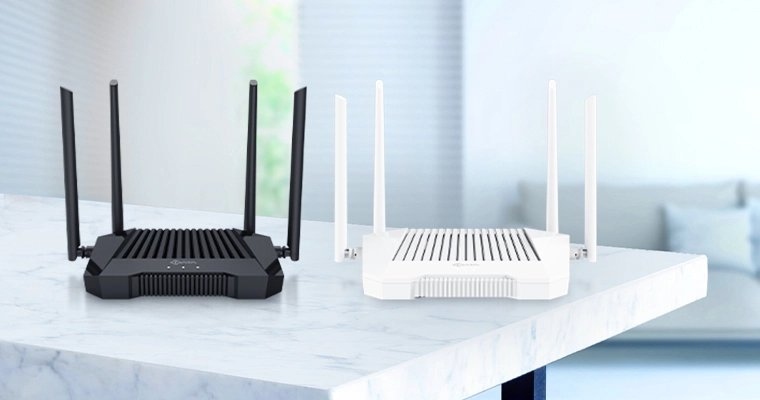
Many buyers now prefer an integrated ONU with router (also searched as optical network unit router) instead of a separate ONT plus home gateway. When comparing these models, examine:
Wi-Fi generation (Wi-Fi 5 vs Wi-Fi 6 such as AX1500, AX2700 or AX3000)
EasyMesh or similar multi-AP support
Number of external antennas and real-world coverage claims
LAN port speeds (1GE vs 2.5GE)
USB ports for storage or failover
Concurrent device capacity and QoS features
An integrated unit lowers installation cost and simplifies inventory, but only if the Wi-Fi performance meets the expected home or office environment. For larger premises, confirm that the model supports mesh expansion rather than relying on a single access point.
Physical design affects both cost and customer satisfaction.
Desktop ONU box: flexible placement, easy for technicians
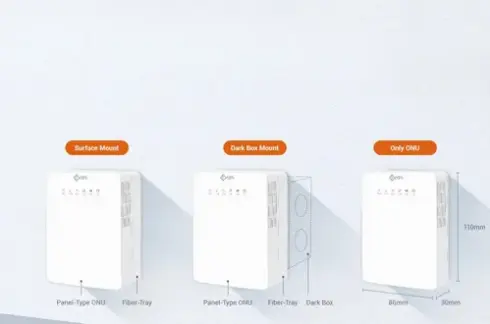
Panel-Type xPON ONU for FTTH: fits commonly used 86-type wall boxes, ideal for new construction and clean residential installs
SFP Stick / module style: useful for integrating PON access into compatible switches, routers or other SFP-host devices.
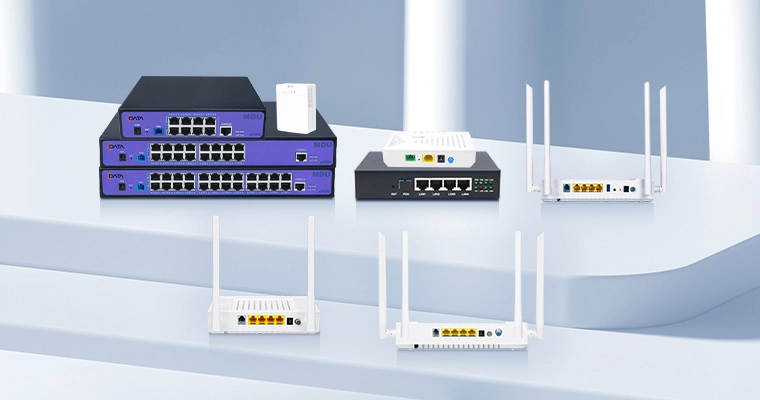
MDU multi-port units: efficient for FTTB and multi-tenant buildings
Panel-type units save space and improve aesthetics, but require careful planning of fiber entry and splicing. Always confirm the exact dimensions and mounting method before ordering large quantities.
Search volume for “optical network unit price” is high, yet unit price alone is a weak decision metric. Calculate total cost of ownership:
Hardware cost
Installation labor and truck rolls
Management platform licensing or integration effort
Failure rate and warranty terms
Future upgrade path (can the same ODN support 10G later?)
A slightly higher-priced unit with better remote management and lower return rates often delivers lower lifetime cost. When comparing ONU manufacturers, request real-world failure statistics and firmware update policies rather than focusing only on the lowest quotation.
Modern networks require remote visibility. Evaluate whether the ONU device works smoothly with your existing EMS or ACS. Features worth checking include:
Zero-touch or near-zero-touch provisioning
Optical power monitoring and alarm reporting
Bulk firmware upgrade capability
TR-069 compliance for third-party EMS/ACS integration
C-Data provides its own CMS platform (sometimes referred to in the market as cdata software) that combines EMS and TR-069 ACS functions. This allows operators to monitor and configure large numbers of ONUs from a single interface, reducing operational overhead.
Bandwidth demand continues to rise. When selecting between current GPON models and higher-capability options, consider:
Whether the network may need XGS-PON within 3–5 years
Support for Wi-Fi 6 or higher to handle denser device environments
Modular or software-upgradable features where available
Optical budget headroom for longer reaches or higher split ratios
Buying only for today’s lowest cost can force an earlier replacement cycle. A balanced approach that covers expected growth usually protects the investment better.
1. Choosing a device solely on the lowest ONU router price without testing interoperability.
2. Ignoring connector type (SC/APC vs UPC) and later discovering optical reflection issues.
3. Under-estimating Wi-Fi requirements in multi-device households.
4. Overlooking remote management capabilities, leading to higher field support costs.
5. Purchasing from an ONU manufacturer that cannot provide long-term firmware and technical support.
As a specialist ONU manufacturer, C-Data offers a broad portfolio covering basic data units, integrated ONU with router, 1GE xPON ONU, multi-port MDU models and XGS-PON options. The company emphasizes third-party OLT compatibility, standardized management interfaces and practical form factors suited to real deployment conditions.
Operators already using C-Data OLT platforms gain additional advantages in provisioning consistency. Browse the C-Data product center to find the ONU model that matches your OLT deployment, or contact C-Data's team for model recommendations based on your network scale.
Before placing an order, confirm the following:
Exact PON standard and dual-mode capability if needed
Required user ports (GE, POTS, CATV, USB)
Wi-Fi generation and Mesh support
Optical connector (prefer SC/APC connector where required)
Management protocol support and CMS compatibility
Operating temperature and power consumption
Warranty terms and firmware support policy
Sample unit testing results with your OLT
Buying the right optical network unit is a balance of technical fit, operational efficiency and long-term value. Focus first on use-case requirements, then verify compatibility, management features and total cost of ownership. Whether you need a basic data ONU, a voice ONU or an integrated Wi-Fi ONU, a structured evaluation process helps reduce deployment risk and improve operational efficiency.
C-Data continues to supply practical, interoperable ONU devices designed for the realities of FTTH, FTTB and enterprise fiber projects. By applying the criteria in this buying guide, network planners can select equipment that meets today’s service needs while remaining ready for tomorrow’s bandwidth demands.
1. What should I prioritize when buying an ONU device?
Start with PON standard compatibility, required services (data, voice, Wi-Fi, CATV), management features and form factor. Price should be evaluated only after these technical and operational factors are satisfied.
2. Is an ONU with router better than a separate ONT plus home gateway?
An integrated ONU with router reduces equipment count and installation time. It is often the better choice for residential and small-office deployments when Wi-Fi performance meets requirements.
3. When should I choose a Panel-Type xPON ONU for FTTH?
Choose panel-type units when space is limited, aesthetics matter, or the project involves new residential construction with standard wall boxes.
4. How important is SC/APC connector type?
SC/APC connectors provide lower back-reflection and higher return loss than UPC connectors, making them widely used in PON networks.
5. What is a realistic way to evaluate ONU router price?
Compare total cost of ownership — hardware, installation, management effort and expected failure rate — rather than unit price alone.
6. Can I mix ONUs from different manufacturers with the same OLT?
Yes, provided the ONUs support the applicable PON standard and management mechanisms and have been verified for interoperability with the targe OLT. Choosing devices from a reliable ONU manufacturer with proven multi-vendor performance reduces risk.
7. Where can I review C-Data ONU options?
The complete portfolio of fiber ONU device and related models is available on the C-Data optical network unit product pages, with additional company and solution information on the official website.